Find distance between given pairs of nodes in a binary tree
Given a binary tree, determine the distance between given pairs of nodes in it. The distance between two nodes is defined as the total number of edges in the shortest path from one node to other.
For example, consider the binary tree. The distance between node 7 and node 6 is 3.
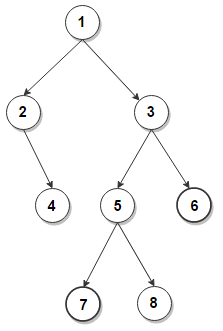
This problem is a standard application of the lowest common ancestor of given nodes. The distance from v to w can be computed as the distance from the root to v, plus the distance from the root to w, minus twice the distance from the root to their lowest common ancestor.
The algorithm can be implemented as follows in C++, Java, and Python:
C++
|
1 2 3 4 5 6 7 8 9 10 11 12 13 14 15 16 17 18 19 20 21 22 23 24 25 26 27 28 29 30 31 32 33 34 35 36 37 38 39 40 41 42 43 44 45 46 47 48 49 50 51 52 53 54 55 56 57 58 59 60 61 62 63 64 65 66 67 68 69 70 71 72 73 74 75 76 77 78 79 80 81 82 83 84 85 86 87 88 89 90 91 92 93 94 95 96 97 98 99 100 101 102 103 104 105 106 107 108 109 110 111 112 113 114 115 116 117 118 119 120 121 122 123 124 125 126 127 128 129 130 131 132 133 134 135 136 137 138 139 140 141 142 143 144 145 146 147 148 149 150 151 152 153 154 |
#include <iostream> #include <climits> using namespace std; // Data structure to store a binary tree node struct Node { int data; Node *left, *right; Node(int data) { this->data = data; this->left = this->right = nullptr; } }; // Helper function to check if a given node is present in a binary tree or not bool isNodePresent(Node* root, Node* node) { // base case if (root == nullptr) { return false; } // if the node is found, return true if (root == node) { return true; } // return true if the node is found in the left or right subtree return isNodePresent(root->left, node) || isNodePresent(root->right, node); } // Helper function to find the level of a given node present in a binary tree int findLevel(Node* root, Node* node, int level) { // base case if (root == nullptr) { return INT_MIN; } // return level if the node is found if (root == node) { return level; } // search node in the left subtree int left = findLevel(root->left, node, level + 1); // if the node is found in the left subtree, return the left pointer if (left != INT_MIN) { return left; } // otherwise, continue the search in the right subtree return findLevel(root->right, node, level + 1); } // Function to find the lowest common ancestor of given nodes `x` and `y`, // where both `x` and `y` are present in a binary tree. Node* findLCA(Node* root, Node* x, Node* y) { // base case 1: if the tree is empty if (root == nullptr) { return nullptr; } // base case 2: if either `x` or `y` is found if (root == x || root == y) { return root; } // recursively check if `x` or `y` exists in the left subtree Node* left = findLCA(root->left, x, y); // recursively check if `x` or `y` exists in the right subtree Node* right = findLCA(root->right, x, y); // if `x` is found in one subtree and `y` is found in the other subtree, // update lca to the current node if (left && right) { return root; } // if `x` and `y` exist in the left subtree if (left) { return left; } // if `x` and `y` exist in the right subtree if (right) { return right; } } // Function to find the distance between node `x` and node `y` in a // given binary tree rooted at `root` node int findDistance(Node* root, Node* x, Node* y) { // `lca` stores the lowest common ancestor of `x` and `y` Node* lca = nullptr; // call LCA procedure only if both `x` and `y` are present in the tree if (isNodePresent(root, y) && isNodePresent(root, x)) { lca = findLCA(root, x, y); } else { return INT_MIN; } // return distance of `x` from lca + distance of `y` from lca return findLevel(lca, x, 0) + findLevel(lca, y, 0); /* The above statement is equivalent to the following: return findLevel(root, x, 0) + findLevel(root, y, 0) - 2*findLevel(root, lca, 0); We can avoid calling the `isNodePresent()` function by using return values of the `findLevel()` function to check if `x` and `y` are present in the tree or not. */ } int main() { /* Construct the following tree 1 / \ / \ 2 3 \ / \ 4 5 6 / \ 7 8 */ Node* root = new Node(1); root->left = new Node(2); root->right = new Node(3); root->left->right = new Node(4); root->right->left = new Node(5); root->right->right = new Node(6); root->right->left->left = new Node(7); root->right->right->right = new Node(8); // find the distance between node 7 and node 6 cout << findDistance(root, root->right->left->left, root->right->right); return 0; } |
Output:
3
Java
|
1 2 3 4 5 6 7 8 9 10 11 12 13 14 15 16 17 18 19 20 21 22 23 24 25 26 27 28 29 30 31 32 33 34 35 36 37 38 39 40 41 42 43 44 45 46 47 48 49 50 51 52 53 54 55 56 57 58 59 60 61 62 63 64 65 66 67 68 69 70 71 72 73 74 75 76 77 78 79 80 81 82 83 84 85 86 87 88 89 90 91 92 93 94 95 96 97 98 99 100 101 102 103 104 105 106 107 108 109 110 111 112 113 114 115 116 117 118 119 120 121 122 123 124 125 126 127 128 129 130 131 132 133 134 135 136 137 138 139 140 141 142 143 144 145 146 147 148 149 150 |
// A class to store a binary tree node class Node { int data; Node left = null, right = null; Node(int data) { this.data = data; } } class Main { // Helper function to check if a given node is present in a binary tree or not public static boolean isNodePresent(Node root, Node node) { // base case if (root == null) { return false; } // if the node is found, return true if (root == node) { return true; } // return true if the node is found in the left or right subtree return isNodePresent(root.left, node) || isNodePresent(root.right, node); } // Helper function to find the level of a given node present in a binary tree public static int findLevel(Node root, Node node, int level) { // base case if (root == null) { return Integer.MIN_VALUE; } // return level if the node is found if (root == node) { return level; } // search node in the left subtree int left = findLevel(root.left, node, level + 1); // if the node is found in the left subtree, return the left child if (left != Integer.MIN_VALUE) { return left; } // otherwise, continue the search in the right subtree return findLevel(root.right, node, level + 1); } // Function to find the lowest common ancestor of given nodes `x` and `y`, // where both `x` and `y` are present in the binary tree. public static Node findLCA(Node root, Node x, Node y) { // base case 1: if the tree is empty if (root == null) { return null; } // base case 2: if either `x` or `y` is found if (root == x || root == y) { return root; } // recursively check if `x` or `y` exists in the left subtree Node left = findLCA(root.left, x, y); // recursively check if `x` or `y` exists in the right subtree Node right = findLCA(root.right, x, y); // if `x` is found in one subtree and `y` is found in the other subtree, // update lca to the current node if (left != null && right != null) { return root; } // if `x` and `y` exist in the left subtree if (left != null) { return left; } // if `x` and `y` exist in the right subtree if (right != null) { return right; } return null; } // Function to find the distance between node `x` and node `y` in a // given binary tree rooted at `root` node public static int findDistance(Node root, Node x, Node y) { // `lca` stores the lowest common ancestor of `x` and `y` Node lca = null; // call LCA procedure only if both `x` and `y` are present in the tree if (isNodePresent(root, y) && isNodePresent(root, x)) { lca = findLCA(root, x, y); } else { return Integer.MIN_VALUE; } // return distance of `x` from lca + distance of `y` from lca return findLevel(lca, x, 0) + findLevel(lca, y, 0); /* The above statement is equivalent to the following: return findLevel(root, x, 0) + findLevel(root, y, 0) - 2*findLevel(root, lca, 0); We can avoid calling the `isNodePresent()` function by using return values of the `findLevel()` function to check if `x` and `y` are present in the tree or not. */ } public static void main(String[] args) { /* Construct the following tree 1 / \ / \ 2 3 \ / \ 4 5 6 / \ 7 8 */ Node root = new Node(1); root.left = new Node(2); root.right = new Node(3); root.left.right = new Node(4); root.right.left = new Node(5); root.right.right = new Node(6); root.right.left.left = new Node(7); root.right.right.right = new Node(8); // find the distance between node 7 and node 6 System.out.print(findDistance(root, root.right.left.left, root.right.right)); } } |
Output:
3
Python
|
1 2 3 4 5 6 7 8 9 10 11 12 13 14 15 16 17 18 19 20 21 22 23 24 25 26 27 28 29 30 31 32 33 34 35 36 37 38 39 40 41 42 43 44 45 46 47 48 49 50 51 52 53 54 55 56 57 58 59 60 61 62 63 64 65 66 67 68 69 70 71 72 73 74 75 76 77 78 79 80 81 82 83 84 85 86 87 88 89 90 91 92 93 94 95 96 97 98 99 100 101 102 103 104 105 106 107 108 109 110 111 112 113 114 115 116 117 118 119 120 121 122 123 124 125 126 127 128 129 130 131 132 133 134 135 |
import sys # A class to store a binary tree node class Node: def __init__(self, data, left=None, right=None): self.data = data self.left = left self.right = right # Function to check if a given node is present in a binary tree or not def isNodePresent(root, node): # base case if root is None: return False # if the node is found, return true if root == node: return True # return true if the node is found in the left or right subtree return isNodePresent(root.left, node) or isNodePresent(root.right, node) # Function to find the level of a given node present in a binary tree def findLevel(root, node, level): # base case if root is None: return -sys.maxsize # return level if the node is found if root == node: return level # search node in the left subtree left = findLevel(root.left, node, level + 1) # if the node is found in the left subtree, return the left child if left != -sys.maxsize: return left # otherwise, continue the search in the right subtree return findLevel(root.right, node, level + 1) # Function to find the lowest common ancestor of given nodes `x` and `y`, # where both `x` and `y` are present in a binary tree. def findLCA(root, x, y): # base case 1: if the tree is empty if root is None: return None # base case 2: if either `x` or `y` is found if root == x or root == y: return root # recursively check if `x` or `y` exists in the left subtree left = findLCA(root.left, x, y) # recursively check if `x` or `y` exists in the right subtree right = findLCA(root.right, x, y) # if `x` is found in one subtree and `y` is found in the other subtree, # update lca to the current node if left and right: return root # if `x` and `y` exist in the left subtree if left: return left # if `x` and `y` exist in the right subtree if right: return right return None # Function to find the distance between node `x` and node `y` in a # given binary tree rooted at `root` node def findDistance(root, x, y): # `lca` stores the lowest common ancestor of `x` and `y` lca = None # call LCA procedure only if both `x` and `y` are present in the tree if isNodePresent(root, y) and isNodePresent(root, x): lca = findLCA(root, x, y) else: return -sys.maxsize # return distance of `x` from lca + distance of `y` from lca return findLevel(lca, x, 0) + findLevel(lca, y, 0) ''' The above statement is equivalent to the following: return findLevel(root, x, 0) + findLevel(root, y, 0) - 2*findLevel(root, lca, 0) We can avoid calling the `isNodePresent()` function by using return values of the `findLevel()` function to check if `x` and `y` are present in the tree or not. ''' if __name__ == '__main__': ''' Construct the following tree 1 / \ / \ 2 3 \ / \ 4 5 6 / \ 7 8 ''' root = Node(1) root.left = Node(2) root.right = Node(3) root.left.right = Node(4) root.right.left = Node(5) root.right.right = Node(6) root.right.left.left = Node(7) root.right.right.right = Node(8) # find the distance between node 7 and node 6 print(findDistance(root, root.right.left.left, root.right.right)) |
Output:
3
The time complexity of the above solution is O(n), where n is the total number of nodes in the binary tree. The program requires O(h) extra space for the call stack, where h is the height of the tree.
Thanks for reading.
To share your code in the comments, please use our online compiler that supports C, C++, Java, Python, JavaScript, C#, PHP, and many more popular programming languages.
Like us? Refer us to your friends and support our growth. Happy coding :)